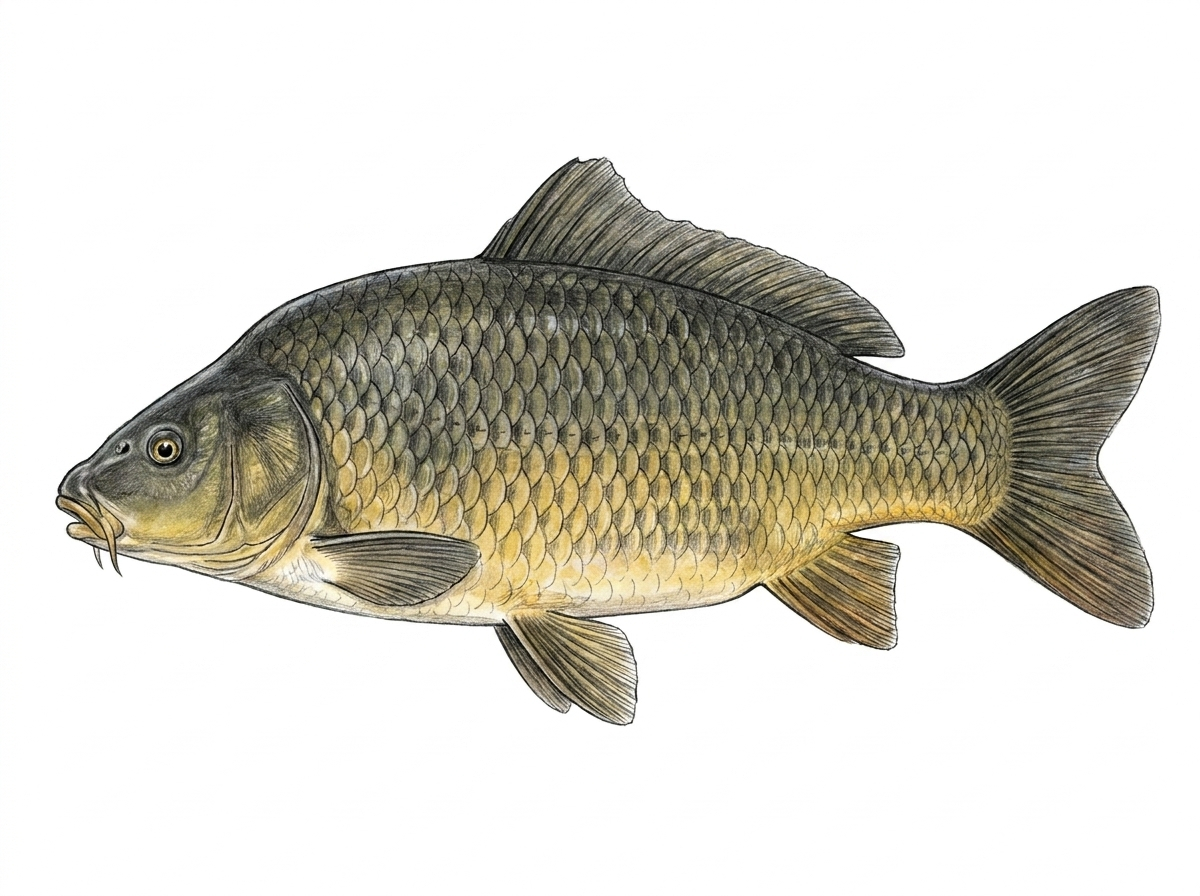
රට පෙතියා
European Carp
Cyprinus carpio
The European Carp, also known as the Common Carp, is a large freshwater fish introduced to Sri Lanka for aquaculture, inland fisheries, and recreational fishing. Originally native to Europe and Asia, it is now widely distributed in reservoirs, lakes, irrigation tanks, ponds, canals, and slow-moving rivers across the island. It is highly adaptable and can thrive in a wide range of freshwater environments, including waters with low oxygen levels and high turbidity. This hardy bottom-feeding fish is an omnivore, feeding on aquatic plants, algae, insect larvae, worms, crustaceans, molluscs, and organic matter stirred up from the sediment. It uses its sensitive barbels to detect food buried in the mud and often disturbs the bottom while foraging. European Carp are generally found in groups and can grow to a large size under favourable conditions. In Sri Lanka, the European Carp is an important species for aquaculture and inland fisheries due to its rapid growth and high food value. However, as an introduced species, it can disturb sediments, increase water turbidity, uproot aquatic vegetation, and compete with native freshwater fishes, potentially affecting the health and biodiversity of natural aquatic ecosystems.