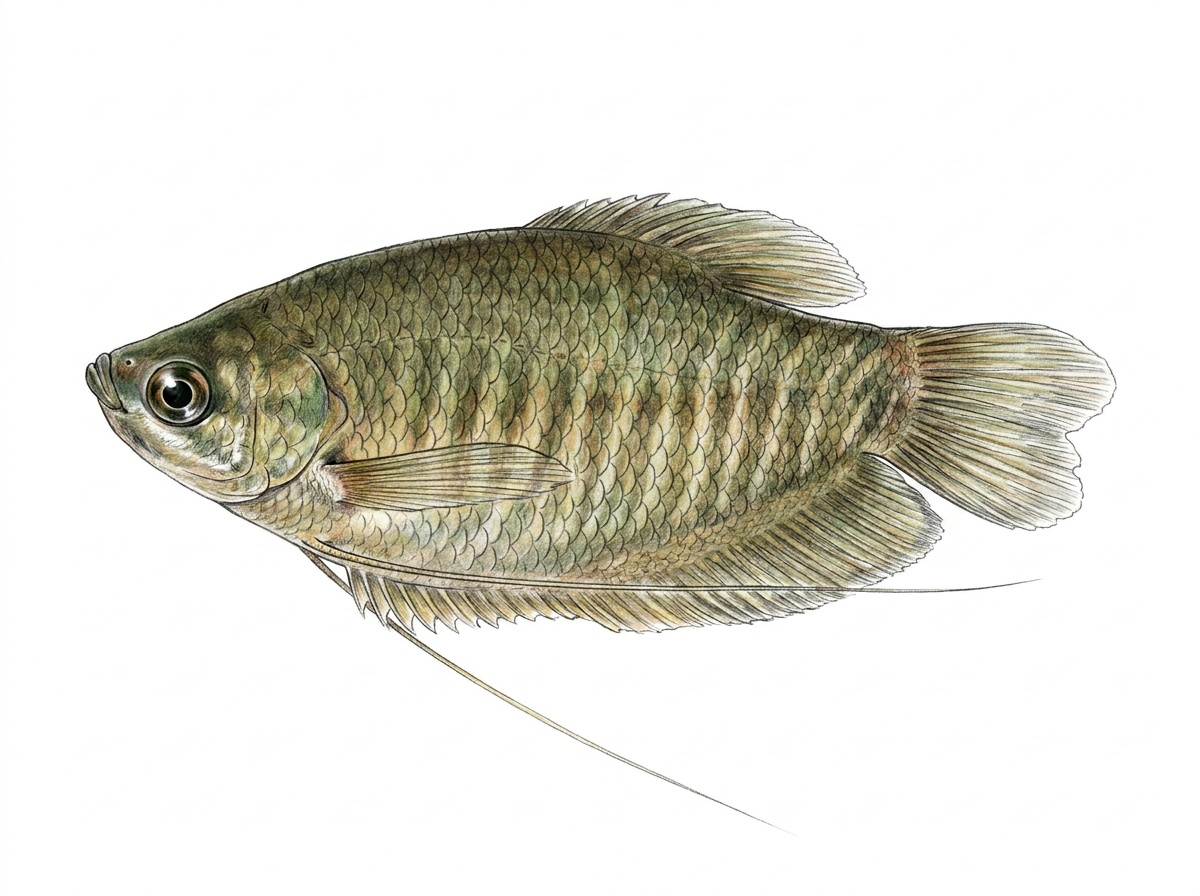
වෙල් ගුරාමි
Snakeskin Gourami
Trichopodus pectoralis
The Snakeskin Gourami is a freshwater fish introduced to Sri Lanka and is commonly found in ponds, reservoirs, marshes, irrigation canals, rice fields, and slow-moving rivers with abundant aquatic vegetation. It prefers warm, shallow waters where dense plant growth provides shelter and suitable breeding sites. Like other gouramies, it possesses a specialized labyrinth organ that allows it to breathe atmospheric air, enabling it to thrive in oxygen-poor environments. This peaceful and hardy species is an omnivore, feeding on algae, aquatic plants, insect larvae, small crustaceans, worms, and other tiny aquatic organisms. It is generally found swimming slowly among aquatic plants and becomes territorial only during the breeding season, when males build and guard bubble nests containing the eggs. The Snakeskin Gourami is valued both as an ornamental fish and as a food fish in parts of Asia. As an introduced species in Sri Lanka, it has become established in many freshwater habitats and may compete with native fish species for food and habitat resources.